
CROWNS, BRIDGES, & IMPLANTS
What Is a Crown?
A dental crown is a custom-made cap that covers and protects a damaged, decayed, or weakened tooth. It restores the tooth’s shape, strength, and appearance, allowing you to chew comfortably and smile confidently.
Crowns are often recommended after large fillings, root canals, or fractures. Depending on your needs and the
condition of the tooth, your crown will fall into one of two types:
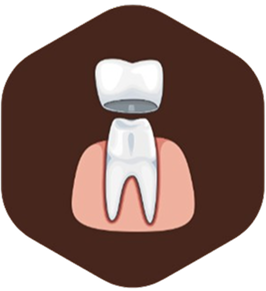
Porcelain or Ceramic
Best for front teeth, these crowns are colour-matched to blend in naturally with your smile. They provide a beautiful, lifelike appearance and are a popular choice for aesthetics.

Full Metal or Zirconium
These crowns offer strong support, making them ideal for molars or back teeth as they provide added durability where bite pressure is higher.
Note: Zirconium crowns are tooth coloured
Why do I need a Crown, Bridge, or Implant?
When a tooth is damaged, missing, or weakened, restoring it is important for both your oral health and overall well-being. A crown protects and strengthens a tooth that’s been cracked, heavily filled, or treated with a root canal. A bridge fills the gap left by one or more missing teeth, preventing neighbouring teeth from shifting. A dental implant replaces a missing tooth completely — from root to crown — helping preserve bone and maintain a strong, natural-looking smile. Restoring your teeth helps you chew comfortably, speak clearly, and smile with confidence.
What to Expect: Crown
Appointment 1
Tooth Preparation & Temporary Crown
- The tooth is shaped to make space for the crown.
- An impression will be taken to custom- design your permanent crown.
- A temporary crown will be placed to protect the tooth in the meantime.
- This appointment usually takes about 60–90 minutes.
Between Appointments
Caring for Your Temporary Crown
- Do:
- Brush gently around the area
- Floss carefully — slide the floss out sideways, not upward
- Call us if it comes loose
- Avoid:
- Sticky foods (gum, toffee)
- Hard/crunchy foods (nuts, raw veggies, ice)
- Chewing directly on the temporary crown
- Mild tenderness or temperature sensitivity is normal.
Appointment 2
Final Crown Placement
- We remove the temporary crown and check the fit and color of your new one.
- Once everything feels right, the crown is permanently cemented.
- You’ll leave with a strong, functional, and natural-looking restoration!
What to Expect: Bridge
- Appointment 1: Tooth Preparation & Temporary Bridge
- The teeth next to the space are gently reshaped to support the bridge.
- An impression is taken for your custom bridge
- A temporary bridge is placed to protect the area while your final bridge is made.
- Appointment 2: Final Crown Placement
- The temporary bridge is removed.
- We check the fit, bite, and appearance of your permanent bridge.
- Once everything looks and feels right, it’s cemented securely into place.
What to Expect: Implant
A dental bridge replaces one or more missing teeth by anchoring an artificial tooth to the natural teeth on either side.This process will take two appointments.
- Prior to Appointment: Implant Placement (Oral Surgeon)
- The implant post is surgically placed into the jawbone by a trusted oral surgeon.
- Healing Phase (Usually 3–6 Months)
- You may wear a temporary tooth or appliance during this time.
- Good oral hygiene and gentle care are essential for success.
- Healing Phase (Usually 3–6 Months)
- You may wear a temporary tooth or appliance during this time.
- Good oral hygiene and gentle care are essential for success.
- Appointment 2: Crown Placement
- Once the implant has healed and stabilized, we place a custom-made crown on top of the implant post.
- The crown is matched to your natural teeth in shape and color for a seamless smile.
Do I Need to Replace the Tooth?

Gum Recession & Root Decay

Tooth Whitening
Chips, Cracks, or Wear
Costs & Insurance
The cost of crowns, bridges, and implants depends on the materials used, the number of teeth involved, and the complexity of the treatment. Before your procedure:
- We’ll provide a full treatment estimate.
- Our team will submit a pre-determination to your insurance provider.
- You’ll receive a breakdown of any out-of-pocket costs.
At Ottawa Street Dental, we understand that getting a crown, bridge, or implant is a big decision - but we’re here to make the process clear, comfortable, and stress- free. Have questions or need guidance?
Caring for the Site
- Avoid eating until the numbness fully wears off
- Chew on the opposite side for 24 hours (or as directed)
- If you had a temporary crown or bridge, avoid sticky or hard foods
- Mild tenderness or sensitivity is normal and should ease in a few days
Oral Care
- Brush and floss gently around the area
- If you have a temporary crown/bridge, floss by pulling the floss out sideways (not upward) to avoid dislodging it
- Rinse with warm salt water if the gums feel tender
Eating & Drinking
- Do:
- Eat soft foods for the first 24 hours
- Stay hydrated with water
- Resume normal diet gradually as comfort allows
- Avoid
- Sticky or crunchy foods (e.g. gum, nuts, hard candies)
- Extremely hot or cold items if the area feels sensitive
- Biting directly on the new crown, bridge, or implant for at least 24 hours
When to Call Us
- You’re unable to bite down comfortably after a few days
- Your temporary crown or bridge comes loose or movement in implant
- You experience persistent pain, swelling, or signs of infection